
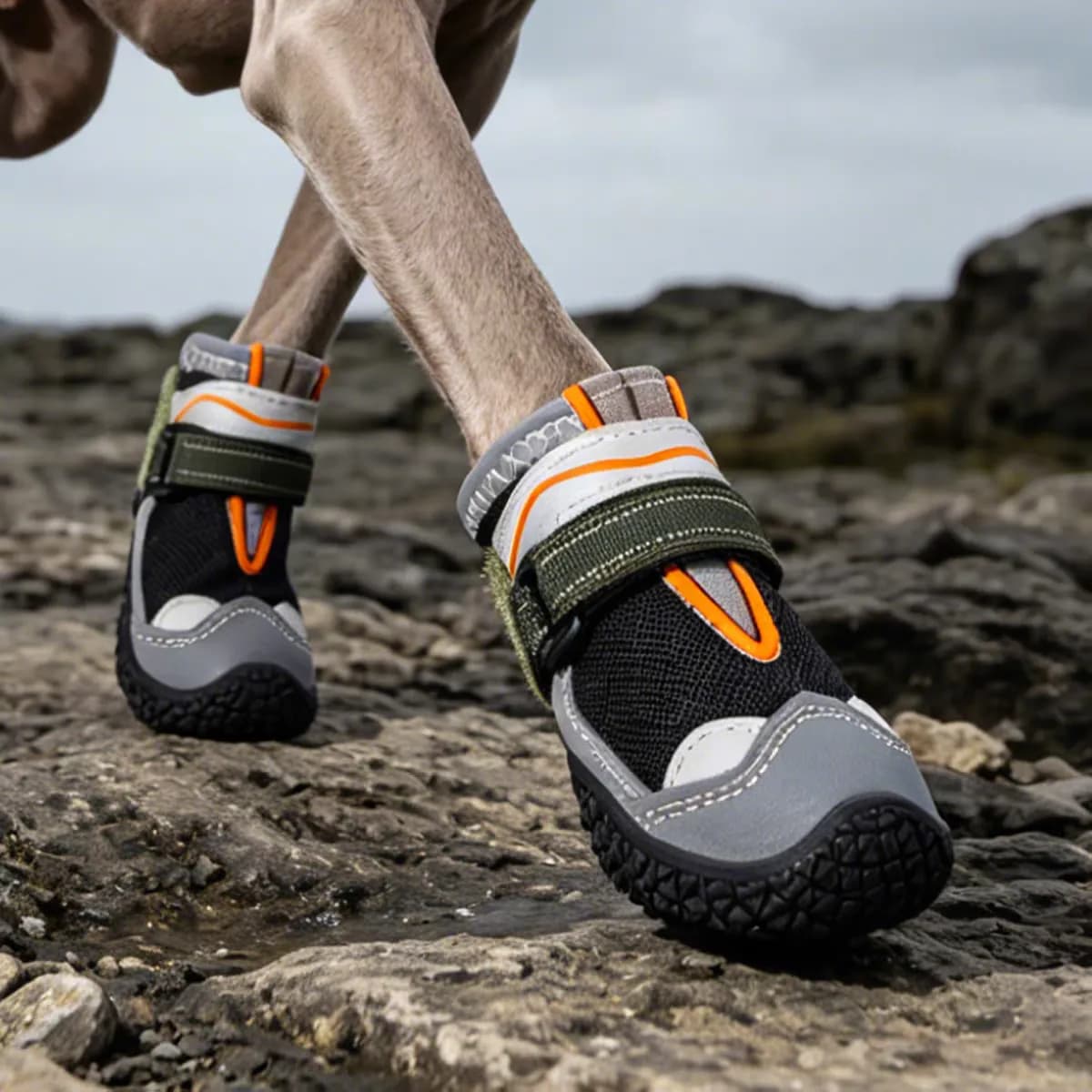
Rocky ground, wet paths and cold surfaces can all change what a dog needs underfoot. Outdoor dog shoes should provide practical protection while still allowing a natural stride. Fit and gradual introduction are as important as the materials themselves.
When might a dog need shoes?
Protective shoes can be useful when the route includes rough or abrasive surfaces, muddy tracks or winter conditions. The right choice depends on the dog, the route and the duration of the outing. Check paws before and after walks, and seek veterinary advice if your dog has an injury or ongoing sensitivity.
Measure for a secure fit
Measure the width and length of each paw while the dog is standing, with weight on that paw. Front and rear paws may differ, so avoid assuming one size fits all four. A shoe should stay in place without pinching, twisting or restricting movement. Follow the product size chart and test the fit indoors before a longer trip.
Compare soles and closures
Consider the sole texture for the expected surface, the flexibility of the shoe and how the upper material handles moisture. Closure placement should make the shoe easy to put on while keeping it secure in motion. Reflective accents can be useful for visibility, but they do not replace a proper fit.
Introduce shoes gradually
Start with short indoor sessions and positive reinforcement. Let the dog walk on a familiar surface before moving outdoors, then increase wear time slowly. Remove the shoes if they rub or change the dog's gait.
Yichen Pet develops protective dog boots and supports OEM and ODM options for materials, colors, sizes and branding. Browse Dog Shoes or contact us about a custom project.